ISO 9001 Certification AuditsWhat to Expect & How to Pass without Stress
Updated July 27, 2026
The certification audit is the moment every organization working toward ISO 9001 thinks about. It is normal to feel some pressure, but a well-designed and properly implemented QMS makes the process much more predictable – because the auditor is evaluating a system that your people already use as part of normal business operations.
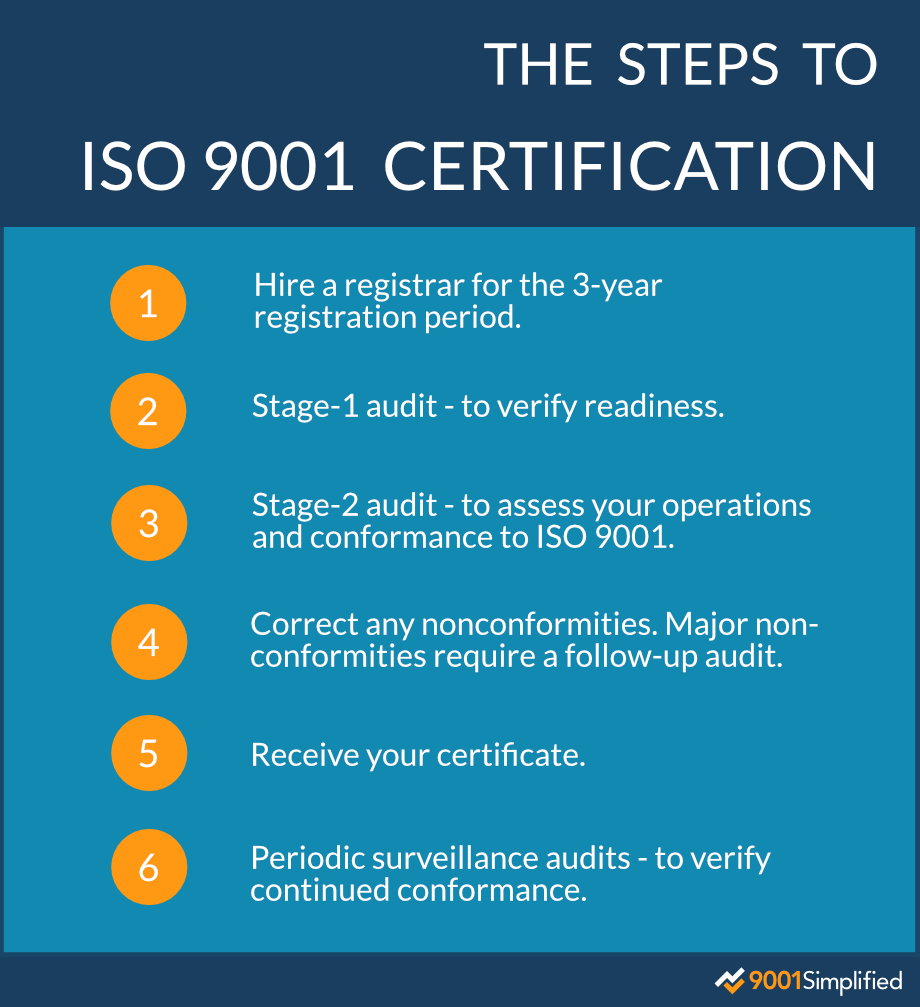
Initial ISO 9001 certification normally involves a Stage 1 and Stage 2 audit, followed by periodic surveillance audits after certification. This guide explains what happens at each stage, what auditors look for, how nonconformities are handled and how to prepare without creating unnecessary "audit theatre."

The ISO 9001 Certification Audit: A Clear Roadmap
The certification audit and the subsequent certification decision are handled by an independent, accredited ISO 9001 certification body, often called a registrar. If you followed our 5-Step Certification Process, you should already have selected your certification body during Preparation and discussed your intended scope.
Confirm Your Certification Body and Audit Dates
Before the formal audit begins, confirm your Stage 1 and Stage 2 dates, certification scope, audit method, information requirements and practical arrangements with your certification body. If you have not yet selected one, compare accredited certification bodies carefully and discuss your proposed scope before finalizing the engagement.
Certification normally operates on a three-year cycle that includes the initial certification audit and subsequent surveillance audits. The exact audit program, including the use of remote auditing techniques, is determined by the certification body based on your organization and circumstances.
Complete the Stage 1 Certification Audit
The Stage 1 Certification Audit is the first part of the formal assessment and is typically performed remotely. Its main purpose is to review your QMS documentation and confirm that your organization is ready for the more extensive Stage 2 audit.
The auditor reviews key documented information such as your QMS scope, quality policy, objectives and relevant procedures or other controls, together with records such as internal audit results and management review. The auditor also confirms important details about your organization and certification scope and identifies any issues that should be addressed before Stage 2.
What auditors focus on: whether your documented QMS covers the applicable ISO 9001 requirements, reflects the scope of the organization and shows enough implementation and evidence to proceed confidently to Stage 2.
At the end of Stage 1, the certification body provides a report identifying any areas of concern or findings that need attention before Stage 2.
Undergo the Stage 2 Certification Audit
Stage 2 is the main certification assessment. The auditor evaluates how the QMS operates in practice and whether applicable ISO 9001 requirements and your own QMS controls are implemented and effective. Audit activities typically include interviews, observation of work processes and review of records and other objective evidence.
Audit time is determined by the certification body using applicable accreditation rules and factors such as the effective number of personnel, certification scope and organizational complexity. IAF MD5:2023, for example, gives a starting point of 2 audit days for the initial Stage 1 and Stage 2 audit combined for organizations with 6–10 effective personnel, before applicable adjustments.
The findings are discussed during the closing meeting and documented in the audit report. The auditor normally explains any nonconformities and the next steps required before the certification decision can be completed.
What Does an ISO 9001 Auditor Look For?
Auditors are not looking for a perfect company or a separate "ISO way" of working. They are looking for objective evidence that the QMS is integrated into normal operations and that applicable requirements are being controlled effectively.
QMS controls that match the way work is actually performed
Evidence that applicable ISO 9001 requirements are implemented and effective
Employees who understand the responsibilities and controls relevant to their roles
Reliable records and other objective evidence supporting what people say
Effective handling of problems, nonconformities and corrective actions
Meaningful internal audits, management reviews and continual improvement
One of the most common weaknesses is a disconnect between documented controls and actual practice. A well-designed QMS avoids this by building ISO 9001 around the business rather than creating a parallel compliance system.
Address Nonconformities
Audit findings may include minor or major nonconformities, as well as other observations or opportunities for improvement depending on the certification body's reporting practices. A nonconformity means that an applicable requirement has not been fulfilled – whether from ISO 9001 or from your own QMS requirements.
There is no universal maximum number of minor nonconformities. Minor findings do not necessarily prevent certification, provided the certification body's requirements for correction and corrective action are satisfactorily addressed. Major nonconformities normally require stronger evidence of correction and may require additional audit activity before certification can be granted.
The practical takeaway: nonconformities are not unusual. Focus on understanding the cause, correcting the issue and demonstrating effective follow-through rather than treating every finding as a crisis.
Receive the Certification Decision and Certificate
After the audit, the certification body completes its independent certification decision. Once any required corrections and corrective actions have been accepted and the decision is favorable, your ISO 9001 certificate can be issued. Timing varies by certification body and the nature of any findings.
The certificate identifies the certified organization and scope, the applicable standard, the certification body and relevant certification details. Check the scope wording carefully because customers and tender authorities may rely on it when evaluating your certification.
Complete Surveillance and Recertification Audits
ISO 9001 certification is not a one-time event. Certification normally operates on a three-year cycle. Surveillance audits are conducted periodically between the initial certification and recertification audit, commonly annually, according to the certification body's program.
Surveillance audits are generally shorter than the initial certification audit and focus on selected parts of the QMS while also reviewing key ongoing requirements, previous findings and evidence that the system continues to be implemented and improved.
The key to smooth surveillance audits: keep the QMS integrated into normal operations. Continue internal audits and management reviews, maintain useful records, address problems as they arise and update documented information when processes genuinely change.
How to Prepare for an ISO 9001 Certification Audit
Good audit preparation is about readiness, not rehearsed answers. In the days and weeks before the audit:
Close known implementation gaps and address internal-audit findings
Confirm that management review has been completed and recorded
Make sure current documents and relevant records are easy to retrieve
Explain the audit process to employees and encourage natural, truthful answers
Check that managers understand the controls and objectives relevant to their areas
Confirm audit logistics, scope and timing with the certification body
For a more detailed preparation guide, see our ISO 9001 audit preparation tips.
Conclusion
The certification audit is much easier to manage when you understand the sequence and build the QMS around the way the business actually works. Stage 1 checks readiness, Stage 2 evaluates implementation and effectiveness, and any findings are handled through the certification body's correction and corrective-action process before the certification decision is completed.
The best preparation is not creating extra paperwork for the auditor. It is making sure your QMS is genuinely implemented, your people understand the controls relevant to their work, and your records demonstrate that the system operates effectively in normal business conditions.