ISO 9001 Management Review: How to Run It & Free Agenda Template
Published April 9, 2026
The management review is one of the most important activities in any ISO 9001 quality management system. It is where leadership meets quality data, evaluates performance, and makes decisions about what needs to change.
Despite its importance, many organizations treat the management review as a formality. They rush through it once a year, cover the basics, and move on. That approach misses the point entirely. A management review should be a management tool, not an ISO paperwork exercise.
When done properly, the ISO 9001 management review connects leadership directly to quality outcomes. It turns data into decisions and gives improvement plans the resources they need to succeed.
This guide covers what Clause 9.3 requires, the inputs and outputs your review must address, a practical meeting agenda you can use right away, and tips for making the process genuinely valuable to the business.

What Is an ISO 9001 Management Review?
A management review is a structured meeting where top management evaluates the performance of the quality management system. It is required by Clause 9.3 of ISO 9001:2015.
The purpose is straightforward. Leadership must assess whether the QMS is still suitable for the organization, whether it is achieving its intended results, and whether any changes or resources are needed. This is not a meeting about daily operations. It is a strategic review that looks at the overall health of the quality system and its alignment with business goals.
Clause 9.3 sits within the broader performance evaluation section of ISO 9001, alongside internal audits and monitoring activities. Together, these three elements give organizations a complete picture of how well their QMS is working.
What Clause 9.3 Requires
ISO 9001:2015 Clause 9.3 is divided into three sub-clauses: general requirements, management review inputs, and management review outputs. Each one defines specific expectations.
General Requirements (Clause 9.3.1)
Top management must review the QMS at planned intervals. The standard does not specify how often, but it must be frequent enough to ensure the system stays effective. Most organizations conduct management reviews quarterly or semi-annually. Annual reviews are acceptable but leave less room for timely course corrections.
Required Inputs (Clause 9.3.2)
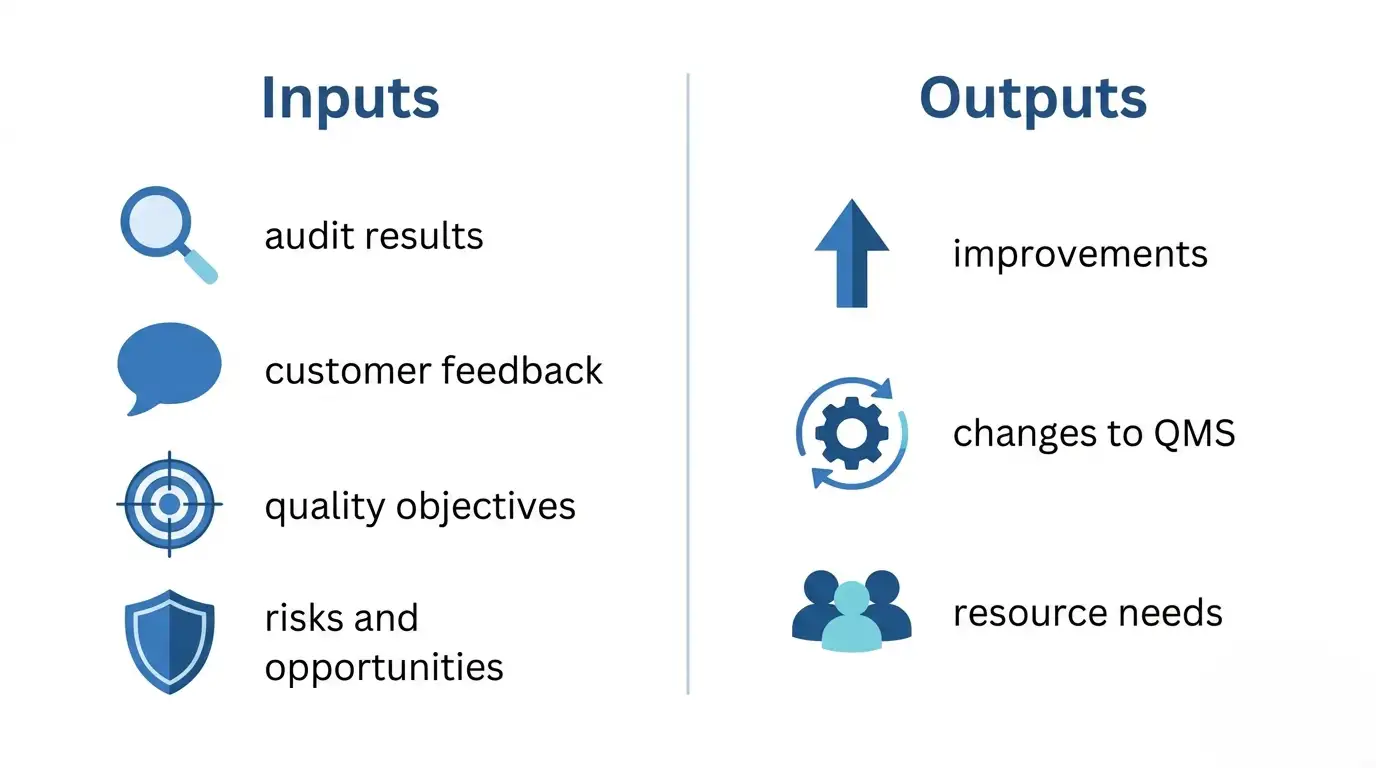
The standard lists specific topics that must be covered as inputs to the management review. These include:
Status of actions from previous management reviews
Changes in external and internal issues relevant to the QMS
Quality performance data including trends in nonconformities, corrective actions, monitoring results, and audit findings
Customer satisfaction and feedback from relevant interested parties
The extent to which quality objectives have been met
Process performance and conformity of products and services
Adequacy of resources
Effectiveness of actions taken to address risks and opportunities
Opportunities for improvement
Each of these inputs should be supported by real data. Vague summaries are not enough. Auditors expect to see specific metrics, trends, and evidence that leadership reviewed meaningful information.
Required Outputs (Clause 9.3.3)
The outputs from a management review must include decisions and actions related to:
Opportunities for improvement
Any need for changes to the quality management system
Resource needs
The organization must retain documented information as evidence that the management review took place. This typically means meeting minutes, action logs, and data reports.
Practical Management Review Agenda Template
A well-structured agenda is the foundation of a productive management review. The agenda below mirrors the requirements of Clause 9.3 and can be adapted to any organization.
1. Opening and Attendance – Confirm attendees. Top management must be present.
2. Review of Previous Actions – Go through action items from the last review. Confirm status and close completed items.
3. Changes to Internal and External Context – Discuss any changes in the business environment, regulations, market conditions, or organizational structure.
4. Customer Satisfaction Review – Present customer feedback data, complaint trends, survey results, and satisfaction scores.
5. Quality Objectives Progress – Review each quality objective against its target. Show data, trends, and any gaps.
6. Process Performance and Product Conformity – Review key performance indicators for core processes. Include defect rates, delivery performance, and any nonconformity data.
7. Audit Results – Summarize findings from internal and external audits. Highlight nonconformities and corrective action status.
8. Risks and Opportunities – Review the effectiveness of actions taken to address risks and opportunities. Identify any new risks.
9. Resource Adequacy – Assess whether current resources (people, infrastructure, technology) are sufficient to support the QMS.
10. Supplier Performance – Review key supplier data and any issues with externally provided processes, products, or services.
11. Improvement Opportunities – Discuss specific areas where the QMS or business processes can be improved.
12. Decisions and Action Items – Document all decisions made during the review. Assign owners and deadlines for every action.
How to Make Management Reviews Valuable Instead of Bureaucratic
The difference between a useful management review and a wasted meeting comes down to three things: preparation, data, and follow-through.
Prepare Before the Meeting
Distribute all input reports at least one week before the review. If attendees see the data for the first time at the meeting, they spend the session reading instead of analyzing. When reports arrive early, participants come with questions and recommendations ready.
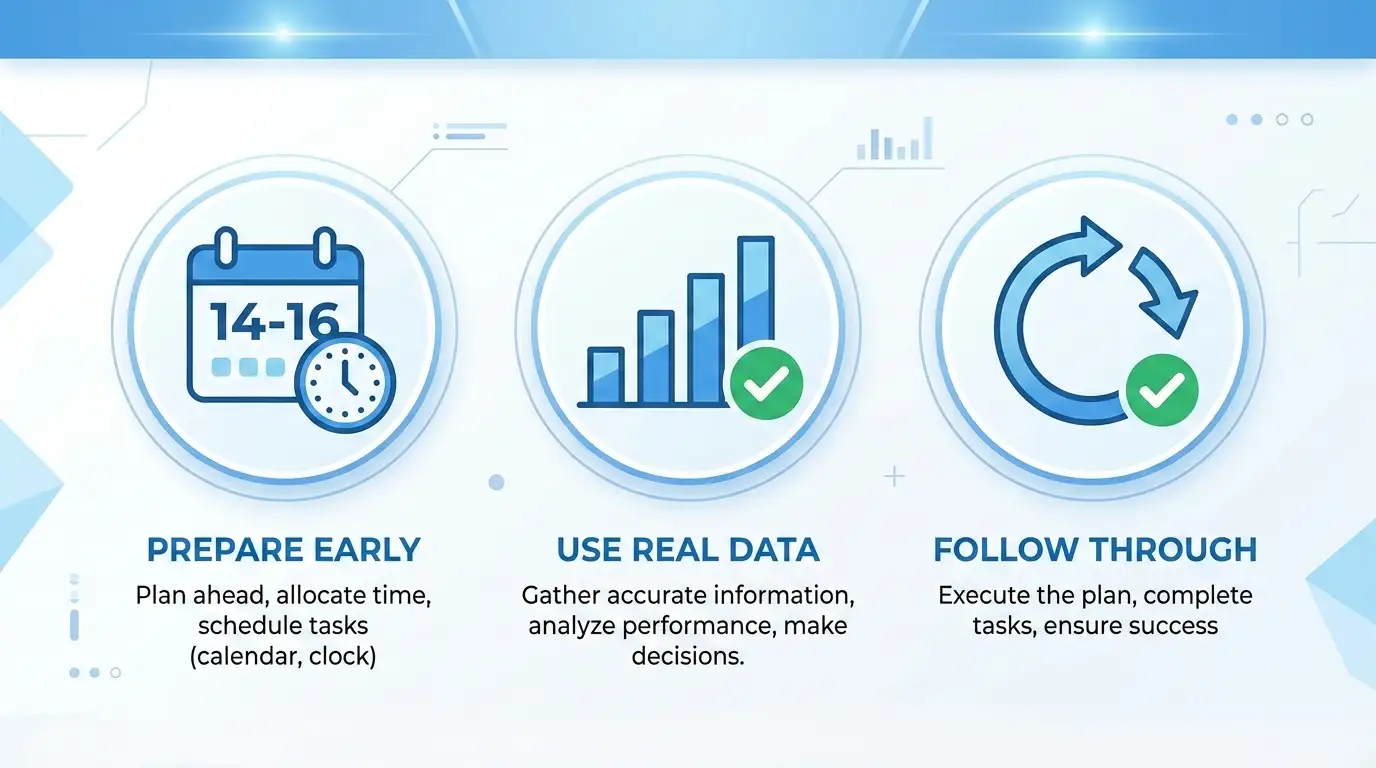
Use Real Data, Not Opinions
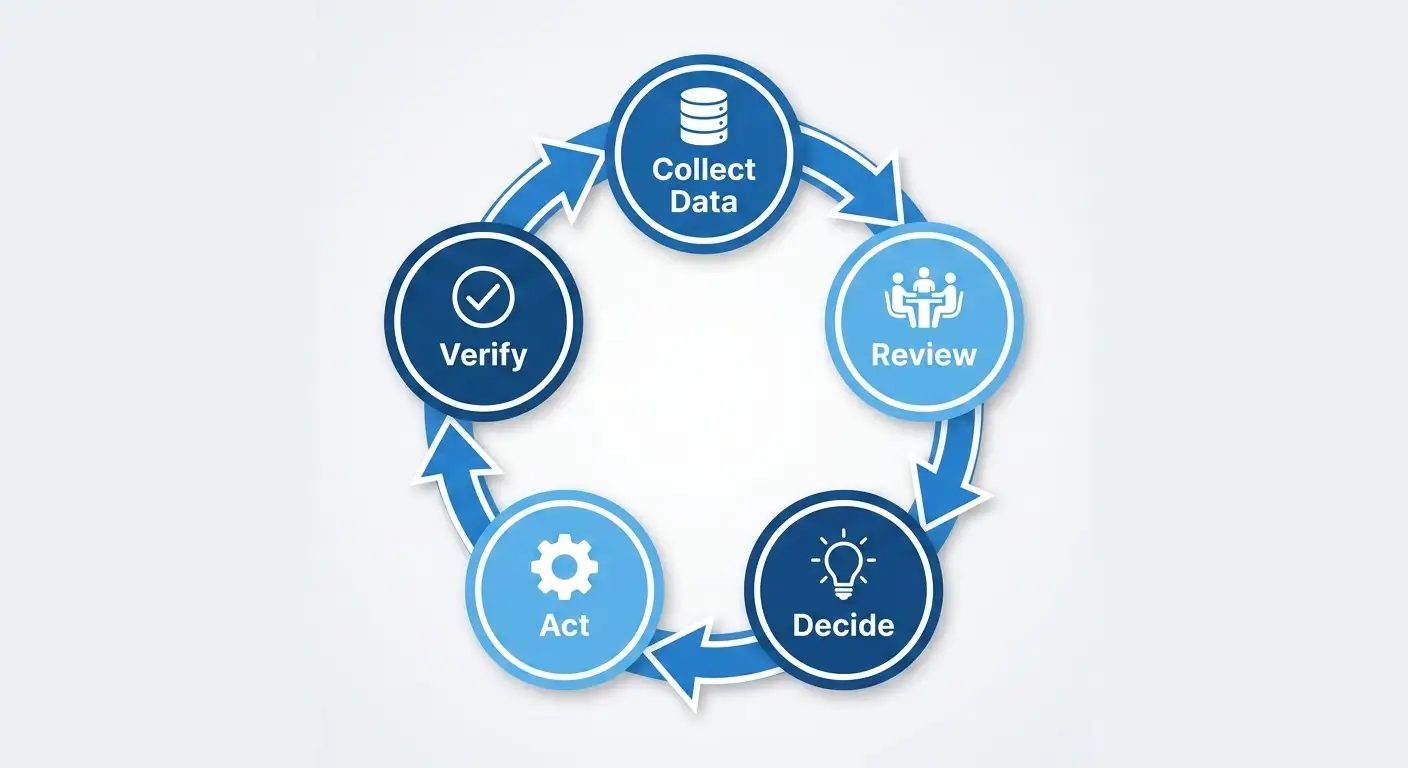
Every input should be backed by measurable evidence. Customer satisfaction scores, not guesses about how customers feel. Defect rates, not assumptions about quality. Audit findings with specific nonconformity counts, not general statements about compliance.
When the review is data-driven, decisions become clearer and more defensible.
Follow Through on Every Action
The most common audit finding related to management reviews is the same issues appearing review after review without resolution. If nonconformities are identified but corrective actions are never completed, the management review becomes a paper exercise.
Every output must have an owner, a deadline, and a verification step. Track actions between reviews and report on their status at the next meeting.
Integrate Into Existing Meetings
The management review does not need to be a separate, disconnected event. Many organizations integrate management review topics into their quarterly leadership meetings. This works well as long as every required input is addressed with data, every discussion produces a clear output, and documented evidence is retained.
What Auditors Look For in Management Reviews
External auditors pay close attention to management review records during certification and surveillance audits. They look for several things:
Evidence that top management was present and actively engaged
All required inputs from Clause 9.3.2 were covered
Decisions were made and documented with assigned responsibilities
Action items from previous reviews were followed up and closed
The review produced measurable outputs, not just discussion
Common nonconformities include missing inputs, vague minutes with no action items, absence of top management, and a pattern of recurring issues that never get resolved.
Organizations that consistently perform strong management reviews find their certification audits are smoother and produce fewer findings.
Tools That Support the Process
Running a productive management review is easier when you have the right forms and procedures in place. A structured agenda ensures no required input is missed. A standardized minutes format keeps records audit-ready. A tracking tool helps follow up on action items between reviews.
Companies preparing for their first certification or looking to improve their review process often use the ISO 9001 Certification Toolkit which includes management review templates alongside other documentation needed for full compliance.
For teams that need to build competence around management review requirements and other ISO 9001 processes, structured ISO 9001 online training programs cover everything from the basics to lead auditor-level understanding.