ISO 9001 for Construction: Why Contractors Are Getting Certified
Published April 6, 2026
ISO 9001 for construction is becoming a competitive necessity, not just a nice-to-have credential. General contractors, specialty trades, engineering firms, and construction managers are increasingly using certification to win bigger contracts, reduce costly rework, and meet growing quality demands from clients in both the public and private sectors.
Construction is an industry where small process failures can have expensive consequences – missed deadlines, rework, budget overruns, disputes, and warranty claims. A well-designed ISO 9001 QMS helps construction companies prevent these problems by bringing greater consistency and control to the way projects are planned, delivered, and improved. The key is to build a system that supports the way your teams actually work, rather than adding another layer of paperwork.
At 9001Simplified, we help construction companies build practical, business-friendly QMSs through DIY toolkits, Hybrid implementation, Full-Service Consultancy, and online training – so they can achieve certification without unnecessary complexity.
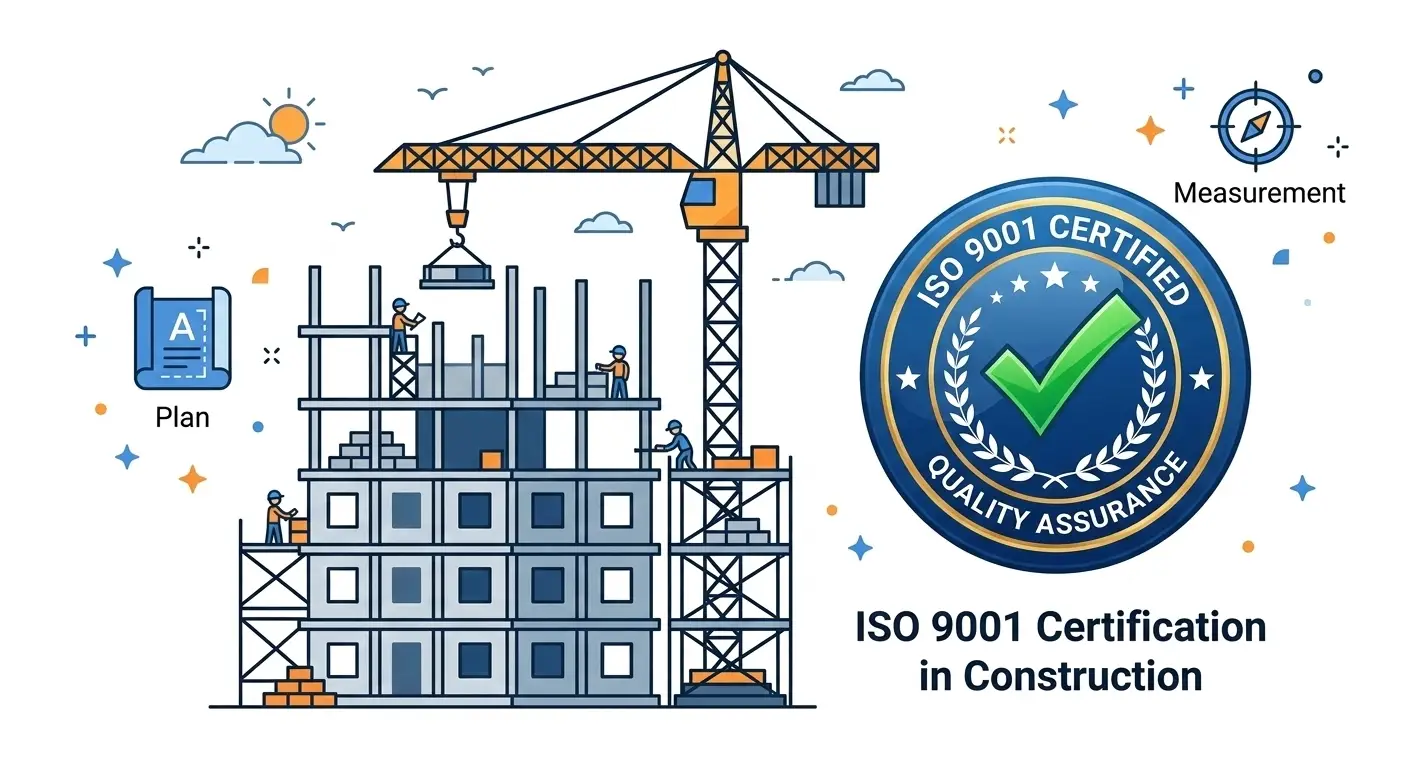
What Is ISO 9001 and Why Does It Matter in Construction?
ISO 9001 is the international standard for quality management systems (QMS). It is published by the International Organization for Standardization (ISO) and used by over 1.4 million organizations in more than 170 countries. It applies to every industry, including construction.
The standard provides a framework for organizations to consistently deliver products and services that meet customer expectations and comply with applicable regulations. In construction, this translates directly to delivering projects on time, within budget, and to the agreed quality specifications.
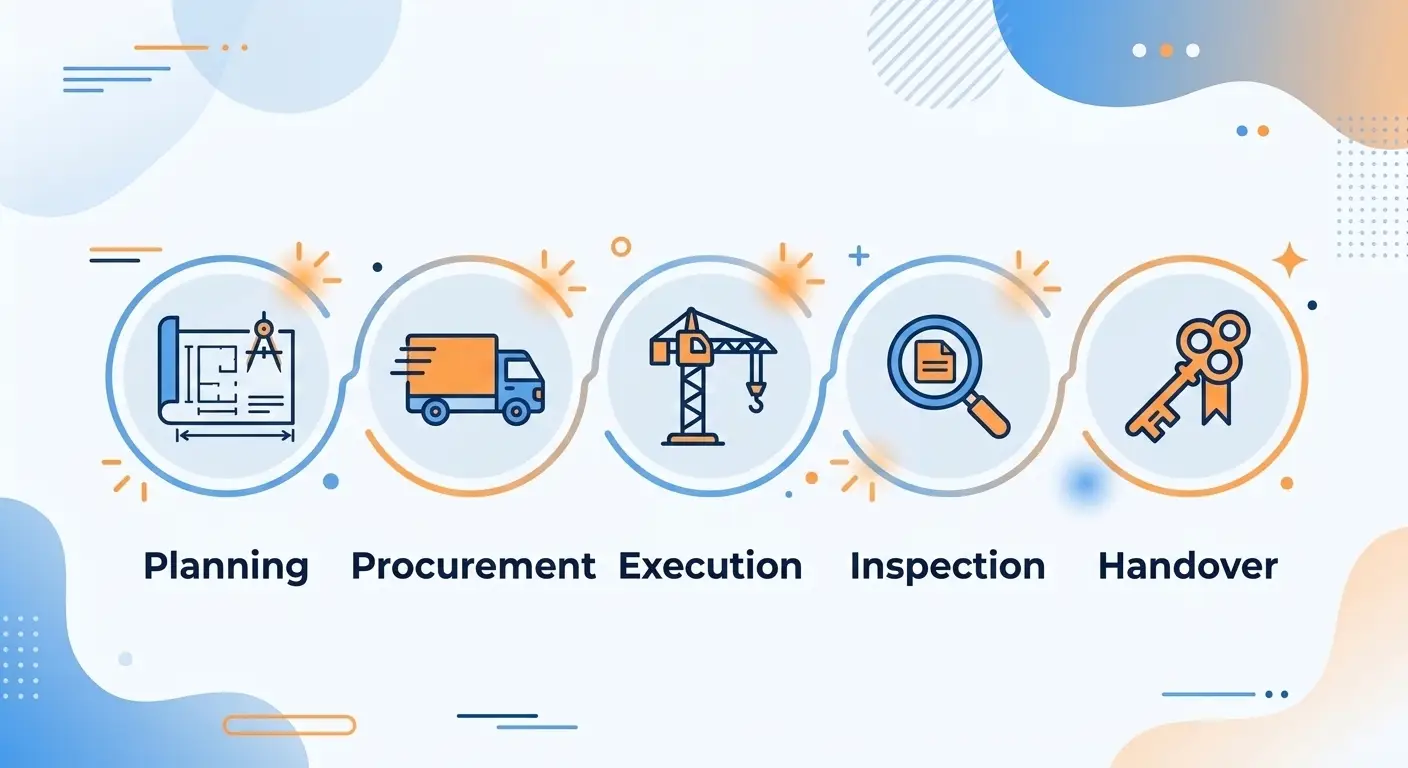
Unlike industry-specific certifications that may only apply to narrow disciplines, ISO 9001 covers the entire business operation. For construction companies, this means it applies to estimating, procurement, project planning, on-site execution, subcontractor management, inspections, handover, and post-completion service.
For a deeper understanding of the standard itself, see our guide on What Is ISO 9001.
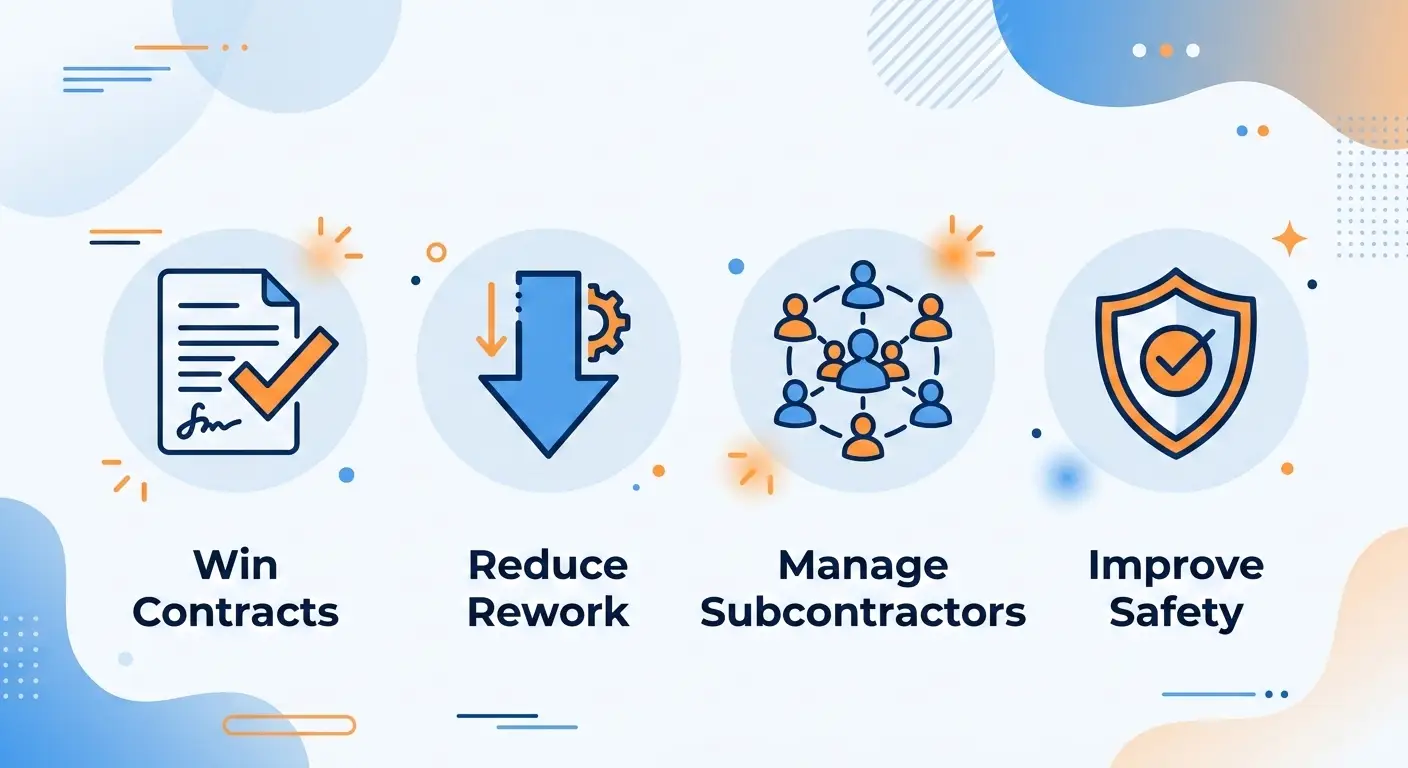
Why Construction Companies Are Getting ISO 9001 Certified
The adoption of ISO 9001 in the construction industry has accelerated in recent years. There are several practical reasons why contractors are choosing to get certified.
Winning Larger Contracts
Many government agencies, institutional clients, and large private developers now require or strongly prefer ISO 9001 certified contractors. In federal contracting, quality management requirements are embedded in regulations like the Federal Acquisition Regulation (FAR). State and local agencies increasingly include ISO certification as a prequalification criterion for bidding on public works projects.
Without certification, construction firms risk being excluded from their most profitable contract opportunities. For more on this topic, read our article on How to Bid on Government Facilities Contracts Before ISO 9001 Certification.
Reducing Rework and Defects
Rework is one of the largest hidden costs in construction. Industry studies consistently show that rework accounts for 5 to 15 percent of total project costs. ISO 9001 reduces rework by requiring documented procedures, clear quality criteria, and systematic inspection and verification at every stage of the construction process.
When processes are defined and followed consistently, errors get caught earlier and happen less often.
Improving Subcontractor Management
Most construction companies rely heavily on subcontractors. ISO 9001 requires formal evaluation and monitoring of external providers, which means construction firms develop structured processes for qualifying, managing, and assessing subcontractor performance.
This leads to better subcontractor relationships, fewer quality disputes, and more predictable project outcomes.
Strengthening Safety and Compliance
While ISO 9001 is a quality standard and not a safety standard, implementing a quality management system naturally improves safety outcomes. Documented procedures, risk assessments, training requirements, and controlled processes all contribute to a safer work environment.
Many construction companies find that implementing ISO 9001 creates a strong foundation that can later be expanded to include ISO 14001 (environmental management) or ISO 45001 (occupational health and safety).
How ISO 9001 Applies to Construction Operations
One of the most common misconceptions about ISO 9001 is that it is only designed for manufacturing. In reality, the standard is intentionally written to be applicable to any industry, and construction companies can apply it directly to their operations. Here is how the key areas of ISO 9001 map to typical construction activities:
Project Planning and Estimating
ISO 9001 requires organizations to plan their processes and define quality objectives. In construction, this applies to project planning, estimating, scheduling, and resource allocation. The standard ensures that these activities follow a consistent, documented approach rather than relying on individual judgment alone.
Procurement and Material Control
Construction projects depend on materials arriving on time and meeting specifications. ISO 9001 addresses procurement through Clause 8.4 (Control of Externally Provided Processes, Products and Services), which requires companies to evaluate suppliers, verify materials upon receipt, and maintain records of supplier performance.
This directly reduces the risk of substandard materials causing project delays or quality failures.
On-Site Execution and Inspection
The standard requires organizations to control their production and service delivery processes. For construction, this means having documented work procedures, inspection and test plans, hold points, and verification activities built into the construction workflow.
Rather than relying on end-of-project punch lists to catch problems, ISO 9001 encourages in-process verification that catches issues while they can still be corrected efficiently.
Document Control
Construction generates enormous volumes of documents – drawings, specifications, submittals, RFIs, change orders, inspection reports, and as-built records. ISO 9001 requires a formal document control system that ensures everyone is working from the correct, current version of every document.
This alone can prevent costly errors caused by outdated drawings or superseded specifications reaching the field. For more on this topic, see our article on Document Control in ISO 9001.
Customer Satisfaction and Handover
ISO 9001 places strong emphasis on customer satisfaction. For construction companies, this means establishing formal processes for client communication, project handover, warranty management, and post-completion follow-up.
Companies that systematically measure and respond to client feedback build stronger reputations and generate more repeat business.
Common Concerns Construction Companies Have About ISO 9001
Many contractors are initially hesitant about ISO 9001 because they believe it will add bureaucracy or does not fit their type of work. Here are the most common concerns and why they are unfounded if ISO 9001 is thoughtfully implemented and designed around the business.
"ISO 9001 is too bureaucratic for construction"
ISO 9001:2015 was specifically redesigned to reduce unnecessary documentation. The standard does not dictate how much documentation you need. It requires that you document what is necessary to ensure consistent quality. For a well-run construction company, many of these processes already exist informally – ISO 9001 simply formalizes and improves them.
"We are too small to need ISO 9001"
ISO 9001 applies to organizations of any size. In fact, small and midsize contractors often benefit the most because certification helps them compete against larger firms for contracts that require quality credentials. Our article on Future-Proofing ISO 9001 for Small Businesses covers this in detail.
"Our work is project-based, not repetitive"
While every construction project is unique, the management processes behind them are repeatable. Estimating, procurement, scheduling, quality control, inspections, and close-out follow the same general workflow on every project. ISO 9001 standardizes these management processes, not the physical construction work itself.
"Our clients have never asked for it"
This is changing rapidly. More clients, especially government agencies and large corporations, now include ISO 9001 as a bid requirement or evaluation criterion. Companies that wait until a client demands it often lose the contract to a competitor who already has certification in place.
How to Get ISO 9001 Certified as a Construction Company
The certification process for construction companies follows the same general path as any other industry, but with some construction-specific considerations.
Step 1: Understand the Requirements
Start by learning what ISO 9001 requires. The ISO 9001:2015 Requirements page provides a complete overview.
Step 2: Conduct a Gap Analysis
Assess your current processes against ISO 9001 requirements. Most construction companies already have quality processes in place – a gap analysis identifies what needs to be formalized or improved.
Step 3: Build Your QMS Documentation
Create or update your quality manual, procedures, work instructions, and forms. Using a pre-built toolkit dramatically reduces the time and cost of this step. The ISO 9001 Certification Toolkit includes all QMS documents with step-by-step customization guidance.
Step 4: Implement and Train
Put the system into practice across your organization. Train employees on the QMS and their specific responsibilities. Our ISO 9001 Online Training courses make this practical and affordable.
Step 5: Internal Audit
Conduct an internal audit to verify your system is working before the external certification audit.
Step 6: Certification Audit
An accredited registrar audits your QMS in two stages. If you pass, you receive your ISO 9001 certificate.
Most construction companies can complete this process in 3 to 6 months with focused effort.
What a Construction QMS Typically Includes
While every company's quality management system will be tailored to its specific operations, a typical construction company QMS built on ISO 9001 includes:
Quality policy and quality objectives
Organizational chart with defined roles and responsibilities
Estimating and bid review procedures
Procurement and supplier evaluation processes
Project planning and scheduling procedures
On-site quality control and inspection plans
Nonconformity and corrective action procedures
Document and drawing control system
Equipment calibration and maintenance records
Employee training and competency records
Customer satisfaction measurement and feedback processes
Management review process
The key is to keep documentation practical and relevant to how your company actually works, not to create a paper system that sits on a shelf.
ISO 9001 Certification and Government Contracts
For construction companies pursuing government work, ISO 9001 certification provides a significant competitive advantage. Many federal, state, and municipal agencies either require or give preference to certified contractors.
Federal contracts governed by the FAR often include quality assurance requirements that align directly with ISO 9001 principles. Having a certified QMS demonstrates to contracting officers that your company has the systems in place to deliver consistent quality.
For companies that are not yet certified but want to start bidding, our article on How to Bid on Federal Contracts Before ISO 9001 Certification explains how to approach this strategically.

How 9001Simplified Helps Construction Companies
Construction companies need practical, no-nonsense solutions. Our services are designed to get you certified without disrupting your operations:
ISO 9001 Certification Toolkit – Complete documentation package you can customize to your construction operations
ISO 9001 Certification Service – Full-service expert support from gap analysis to certification
ISO 9001 Online Training – Training for your team at every level, from field staff awareness to lead auditor certification
ISO 9001 Gap Analysis and Implementation Plan – Know exactly where you stand before investing
Whether you are a general contractor, specialty trade, engineering firm, or construction manager, we can help you achieve certification on a timeline and budget that works for your business.