How Much Does ISO 9001 Certification Cost? (2026 Price Guide)
Published March 18, 2026
ISO 9001 certification cost is the first question most businesses ask – and the answer depends primarily on your company size, complexity, and chosen implementation approach. For a small business, expect USD 5,000 to USD 15,000 all-in. This guide breaks down every component so you can budget accurately and choose the most cost-effective path for your specific situation.
The total cost of ISO 9001 certification includes several components: the implementation method (Full-Service Consultancy, DIY Toolkit, or Hybrid), documentation and process development, employee training, internal audits, and the certification body audit itself. Understanding these costs upfront helps you choose an approach that fits both your budget and your business.
At 9001Simplified, we offer all three implementation approaches, along with training and specialist services, so businesses can choose the level of support they need to build an effective QMS and achieve ISO 9001 certification without unnecessary complexity.
What Makes Up the ISO 9001 Certification Cost?
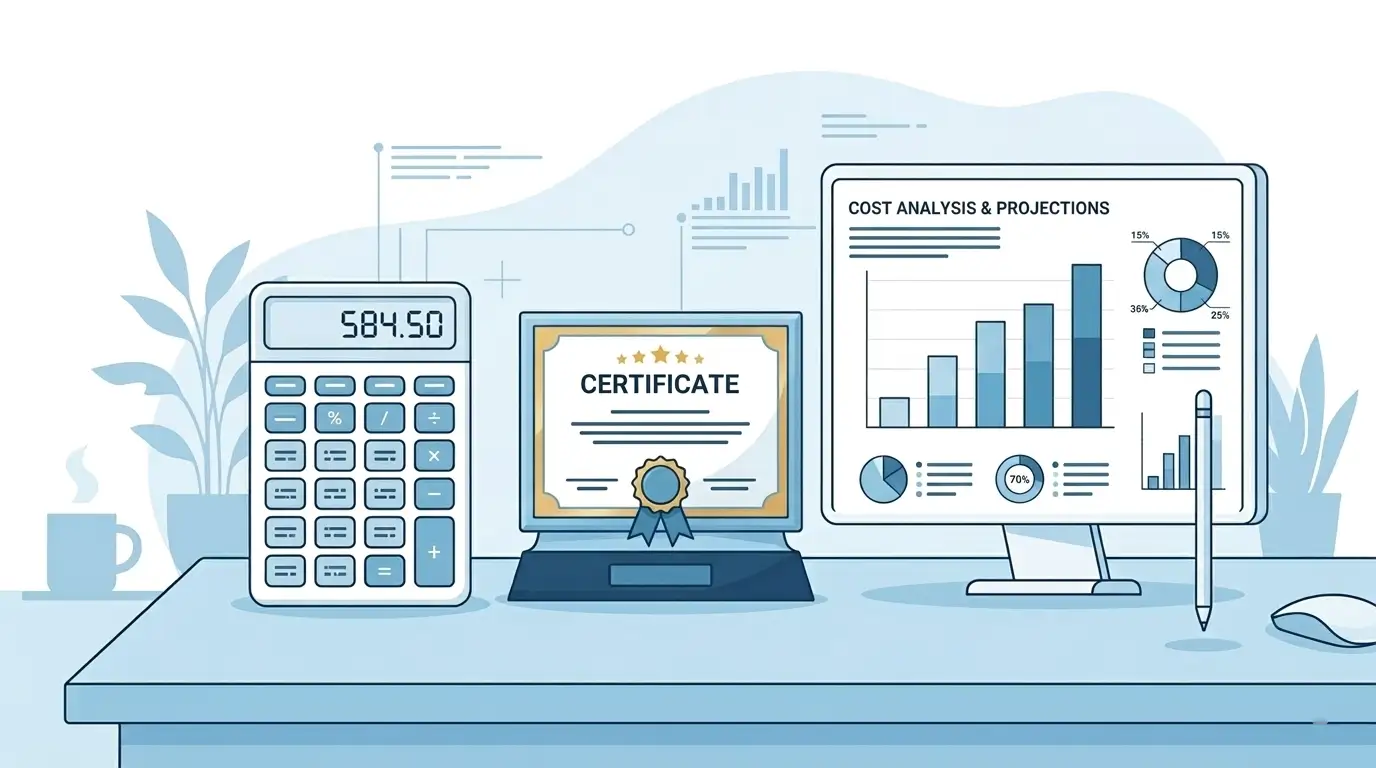
The total cost of ISO 9001 certification is made up of two main categories: preparation costs (getting your quality management system ready) and certification costs (the actual audit and registration by an accredited certification body).
Preparation Costs
These are the costs involved in building and implementing your quality management system before the certification audit:
Gap Analysis: USD 100 – USD 5,000
An assessment of your current processes compared to ISO 9001 requirements. Identifies what needs to change before certification. Can be done in-house with the right tools and guidance.
Documentation Development: USD 1,500 – USD 10,000
Creating the required policies, procedures, quality manual, and records. This is often the most time-consuming part. Ready-to-configure QMS documents can significantly reduce the time spent.
Employee Training: USD 500 – USD 5,000
Training your team on ISO 9001 requirements, quality awareness, and their specific roles within the QMS.
Internal Auditing: USD 500 – USD 10,000
Conducting at least one round of internal audits to test your system before the external certification audit. Can be conducted by in-house staff after specialized training.
Consultant Fees (if applicable): USD 1,500 – USD 20,000+
Hiring an ISO consultant to guide you through implementation. This is optional but common. Full-service consultancy starts at about USD 15,000 and includes the other items on this list.
Certification Costs
These are the fees paid directly to the certification body (registrar) that conducts your audit:
Stage 1 Audit (Document Review): USD 1,000 – USD 2,500
The auditor reviews your documentation to confirm readiness for the full audit.
Stage 2 Audit (Operations Assessment): USD 1,500 – USD 10,000
The full on-site audit where the auditor evaluates your implemented QMS.
Registration and Admin Fees: USD 200 – USD 500
Administrative costs for issuing the certificate.
ISO 9001 Certification Cost by Company Size
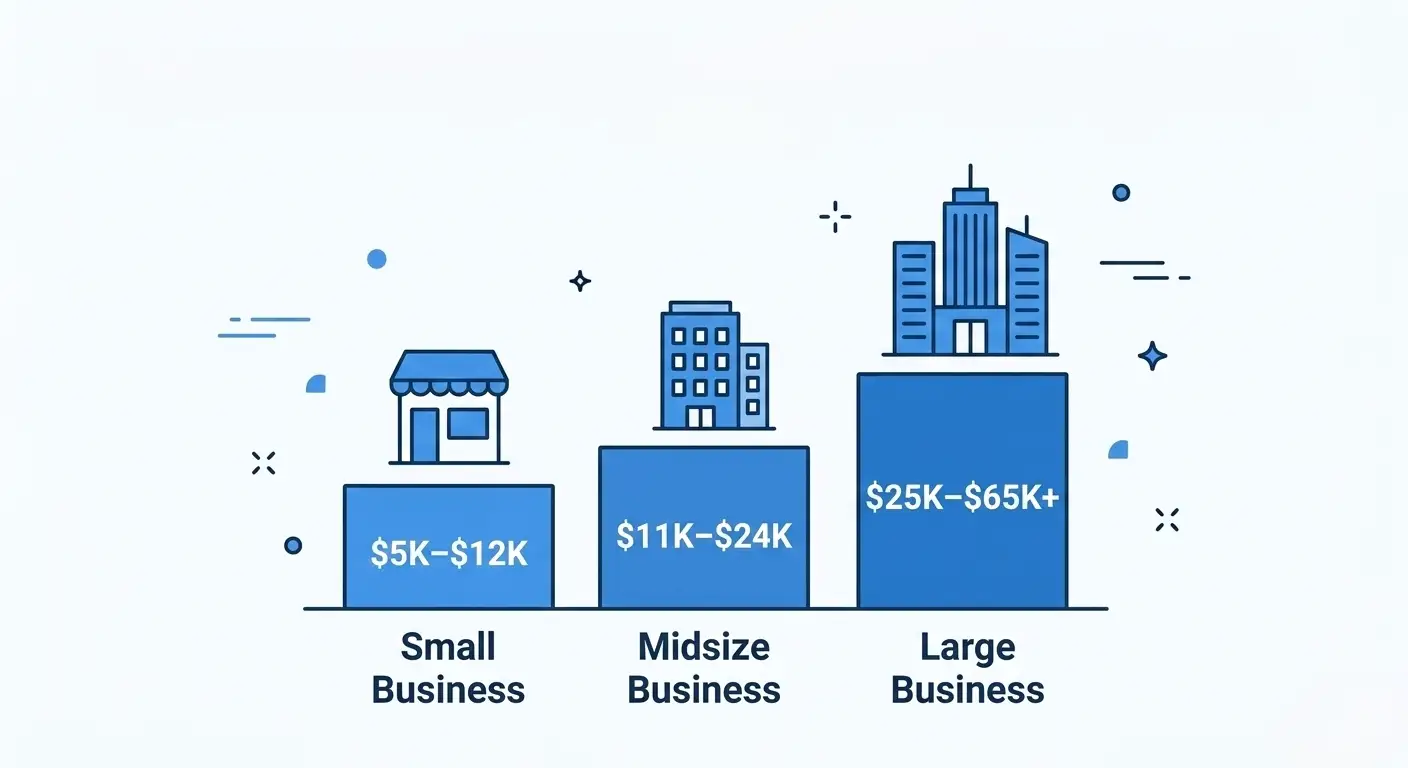
The following table provides a general cost estimate based on company size. Actual costs will vary based on your approach and staff participation, as well as industry, location, existing processes, and other factors.
Cost Category
Small Business (1–50)
Mid/Large Business (50–500+)
Gap Analysis
USD 100 – USD 3,000
USD 3,000 – USD 5,000
Documentation
USD 1,500 – USD 3,000
USD 1,500 – USD 10,000
Employee Training
USD 500 – USD 2,000
USD 2,000 – USD 5,000+
Internal Audit
USD 500 – USD 6,000
USD 500 – USD 10,000+
Consultant (optional)
USD 1,500 – USD 20,000
USD 3,000 – USD 30,000+
Certification Audit
USD 3,000 – USD 8,000
USD 8,000 – USD 20,000+
TOTAL ESTIMATED RANGE
USD 5,000 – USD 20,000
USD 13,000 – USD 40,000+
Small businesses with simpler processes and fewer employees implementing ISO 9001 internally will naturally fall on the lower end. Larger organizations with multiple sites, complex processes, or regulated industries should expect higher costs due to longer audit times and more extensive documentation requirements.
Three Approaches to ISO 9001 Certification
How you choose to implement ISO 9001 has the biggest impact on your total cost. There are three common approaches:
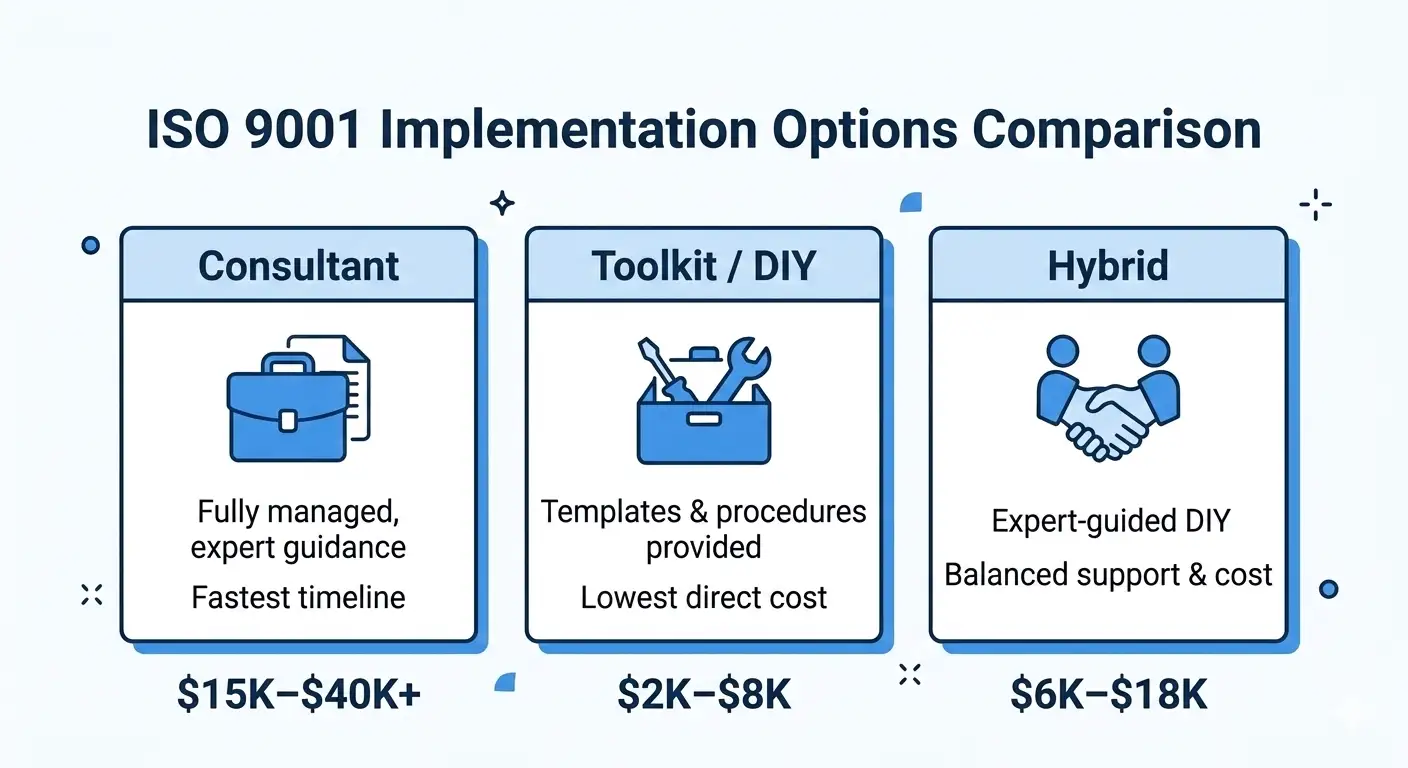
1. Hire a Consultant (Full-Service)
An ISO consultant handles much of the implementation work for you, including gap analysis, documentation, training, internal audit, and preparation for the certification assessment.
Cost: USD 15,000 – USD 30,000+ depending on company size and complexity
Best for: Companies with tight certification deadlines and/or limited staff availability
Pros: Fastest path. Expert guidance reduces risk of audit failure. Minimal internal time required.
Cons: Most expensive option. Less internal ownership of the QMS.
Our full-service consultancy guarantees stress-free certification by your deadline and includes a signed confirmation letter to address your customer's immediate requirements.
2. Use a Certification Toolkit (DIY)
A toolkit provides pre-built, ready-to-configure QMS documents, implementation guides, audit checklists, and training materials. You do the work yourself, but with structured guidance.
Cost: USD 2,500 – USD 4,000 for the toolkit, plus certification audit fees
Best for: Small and midsize businesses that want to develop internal ownership and control costs while still getting expert-level documentation
Pros: Significantly cheaper than a consultant. You build real internal knowledge. Documentation is already aligned with ISO 9001.
Cons: Requires internal time and commitment from your team (10–15 hours per week).
Our ISO 9001 Certification Toolkit includes everything you need for successful do-it-yourself implementation: ready-to-configure QMS documents, a step-by-step certification guide, quality manual, audit checklists, training, and expert support. When you order, you configure the toolkit to your industry at checkout.
3. Hybrid Approach
The Hybrid Approach combines the affordability of the DIY Toolkit with targeted consultant support for high-stakes tasks like gap analysis or internal audits. This is increasingly popular for companies that want cost control with expert safety nets.
Cost: 40–75% less than full-service consulting
Best for: Companies wanting expert backup for critical phases while maintaining budget control
Pros: Balanced investment. Expert support where it matters most. Flexible.
Cons: Requires some internal coordination.
Learn about our Hybrid Approach to certification.
Factors That Affect ISO 9001 Certification Cost
Several factors influence how much your organization will spend:
Company size and number of employees: More employees means more training, more processes to document, and longer audit times.
Number of locations: Each additional site typically increases audit days and certification costs; however, our experts may be able to design a cost-saving approach.
Complexity: Complex operations and design activities require more extensive documentation, extra training, and additional audit days.
Industry: Highly regulated industries (aerospace, medical, food) often require more extensive documentation.
Current state of your processes: If you already have documented processes, the gap is smaller and costs are lower.
Choice of certification body: Different registrars have different pricing structures. Always compare quotes from at least two or three accreditation bodies.
Geographic location: Auditor travel costs and local market rates vary by region.
Ongoing Costs After Certification
ISO 9001 certification is not a one-time expense. After your initial certification, you enter a three-year cycle:
Year 1 – Surveillance Audit: USD 2,000 – USD 5,000
A shorter audit to confirm your QMS is being maintained.
Year 2 – Surveillance Audit: USD 2,000 – USD 5,000
Another check-in audit similar to Year 1.
Year 3 – Recertification Audit: USD 2,000 – USD 8,000
A full re-audit of your entire QMS to renew your certification for another three years.
In addition to audit fees, ongoing internal costs include maintaining documentation, conducting internal audits, management reviews, and continuing employee training. Businesses that integrate ISO 9001 into their daily operations rather than treating it as a separate activity will find these costs manageable and the benefits far greater.
Is ISO 9001 Certification Worth the Cost?
For most businesses, the answer is yes. ISO 9001 certification delivers measurable returns that typically exceed the investment within 18 to 24 months. Independent research from the Standards Council of Canada analyzed data from 33 countries and found that ISO 9001:2015 certification increases total sales by 48.3%, with small and medium-sized enterprises benefiting the most. The most common benefits include:
Improved operational efficiency and reduced waste
Better product and service consistency
Increased customer confidence and satisfaction
Access to new markets and contracts that require certification
Easier regulatory compliance
Stronger competitive positioning
Many government contracts and large corporations require suppliers to hold ISO 9001 certification. Without it, you may be excluded from significant business opportunities.
To see real examples of how companies have benefited, visit our ISO 9001 Case Studies page.
How to Reduce ISO 9001 Certification Costs
There are several practical ways to keep your certification costs under control:
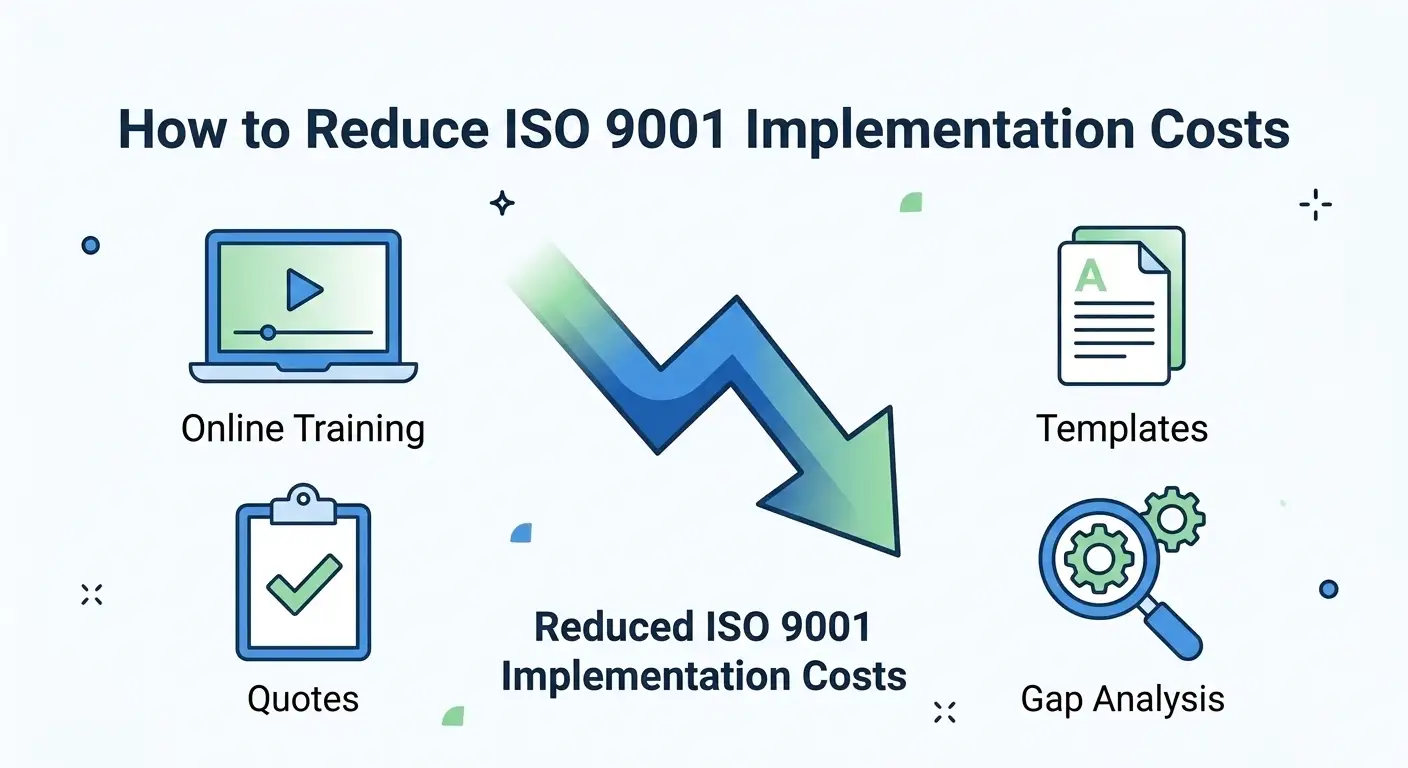
Use a certification toolkit instead of hiring a consultant.
Develop a simplified ISO 9001 system that's easy to implement and maintain.
Train internal staff to conduct internal audits rather than outsourcing them.
Leverage on-demand, online training to minimize staff downtime.
Compare quotes from multiple accredited certification bodies before choosing one.
Have services (including the certification audit) conducted remotely.
Leverage existing processes. If you already have documented procedures, you may not need to start from scratch.
Implement a sampling plan for internal and surveillance audits if you have more than one location.
Our ISO 9001 Online Training Courses are designed to build internal competence, reducing your dependence on external consultants for both initial certification and ongoing maintenance.
How to Get Started
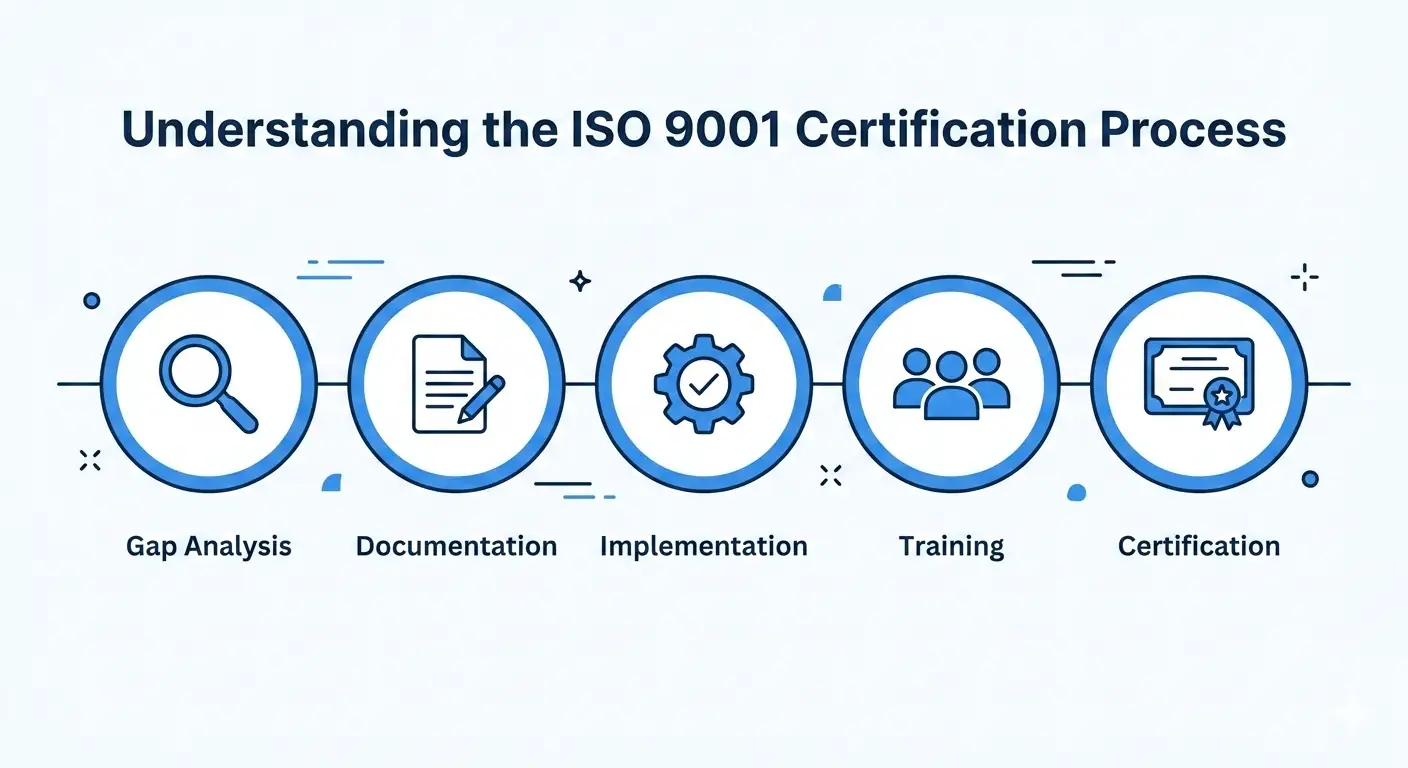
Getting ISO 9001 certified follows a structured process:
1. Conduct a gap analysis to understand where you stand
2. Develop or update your documentation (policies, procedures, forms and checklists)
3. Train your employees on your company's specific ISO 9001 requirements
4. Run internal audits to verify compliance
5. Select an accredited certification body and schedule your audit
6. Pass your Stage 1 and Stage 2 audits to achieve certification
For a step-by-step guide, see our ISO 9001 Certification Steps page. Or, if you prefer a completely hands-off implementation, our ISO 9001 Certification Service provides expert guidance through every step of the process.